Projects
Code that escaped the containment wards
SWAPMEAT
Guild Wars
Guild Wars: Factions
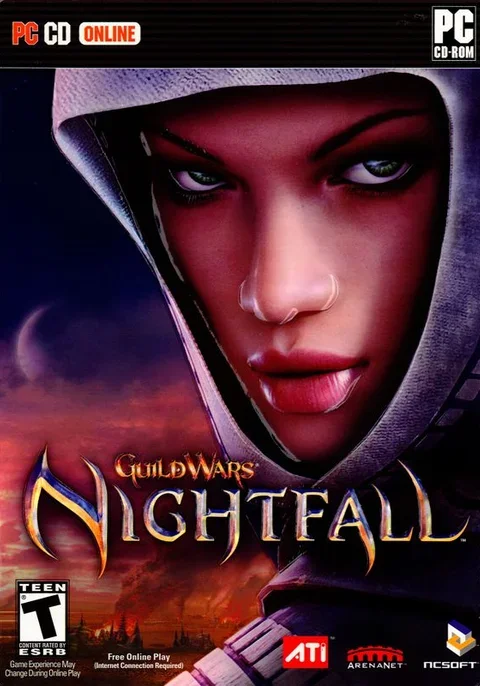
Guild Wars: Nightfall
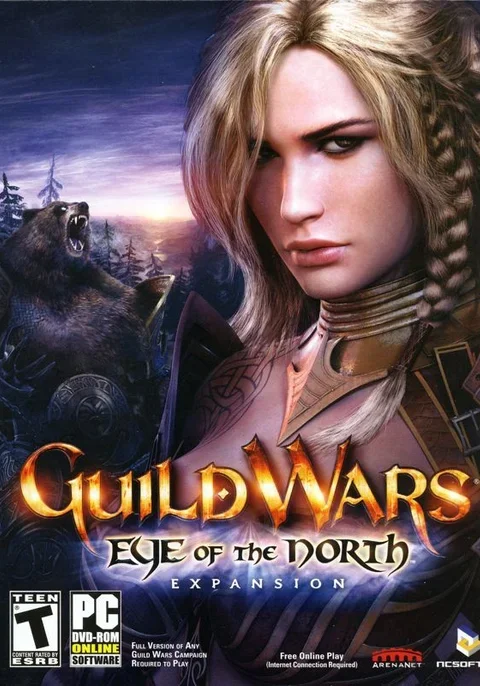
Guild Wars: Eye of the North
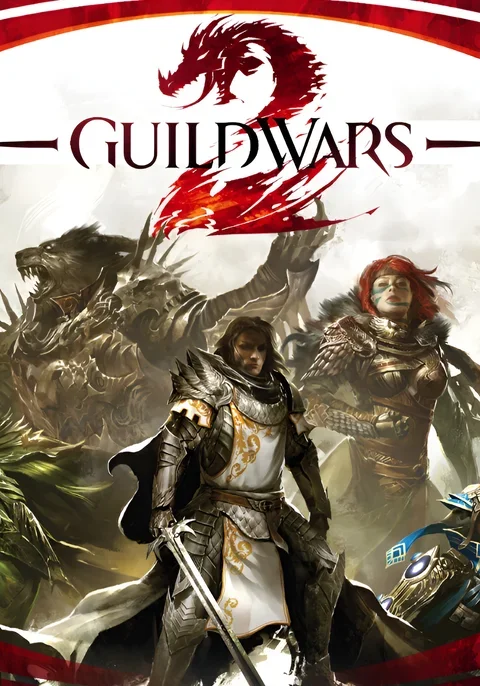
Guild Wars 2
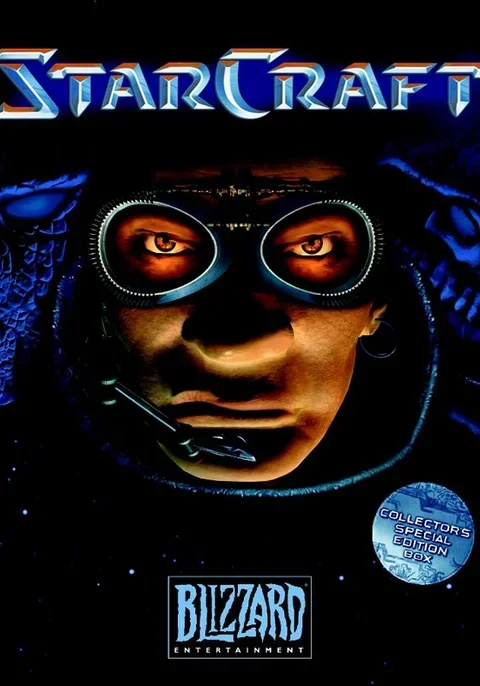
StarCraft
StarCraft: Brood War
Diablo
Diablo II
WarCraft: Orcs and Humans
WarCraft II: Tides of Darkness
WarCraft II: Beyond the Dark Portal
Tera
Aion
The Lost Vikings
Norse by Norse West: The Return of the Lost Vikings
Rock n Roll Racing
Blackthorne
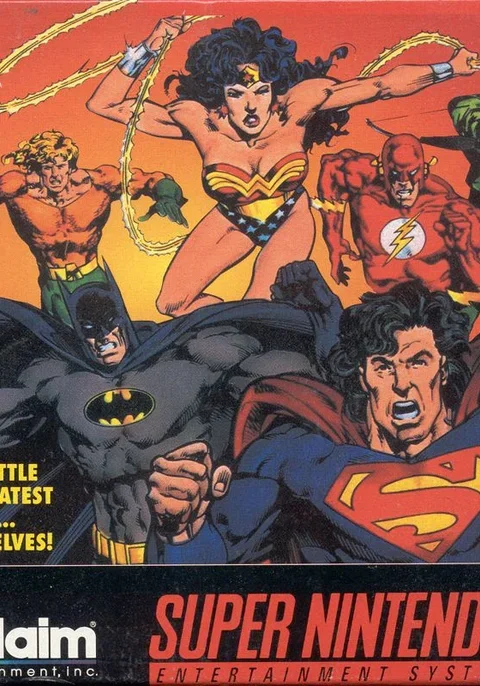
Justice League: Task Force
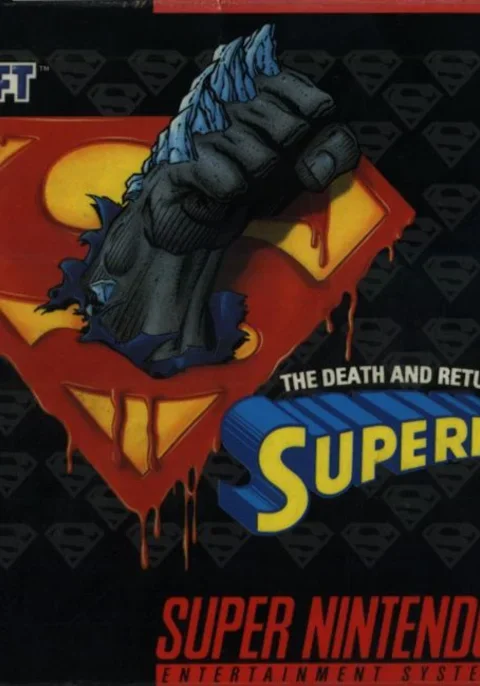
The Death and Return of Superman
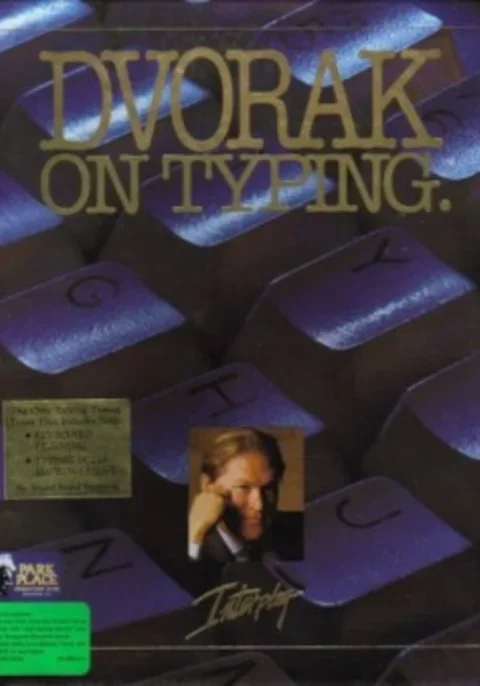
Dvorak on Typing / Mac
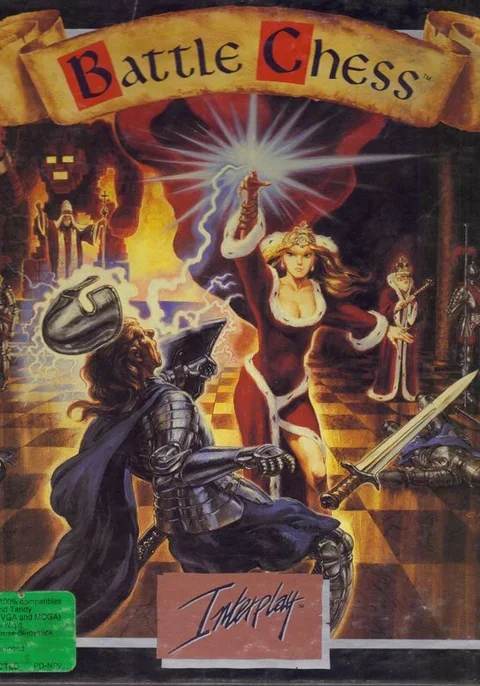
Battle Chess
Battle.net
sandvault
clodpod
push10k
ChronoSnap

Habits
RealityKit
TubeGate

Phoenix Slides
git-multi-hook
pbutils
dotfiles

CSNamedPipes
gnome-config-listener

two-queues

aho_corasick
Code of Honor
SWAPMEAT Game Original #
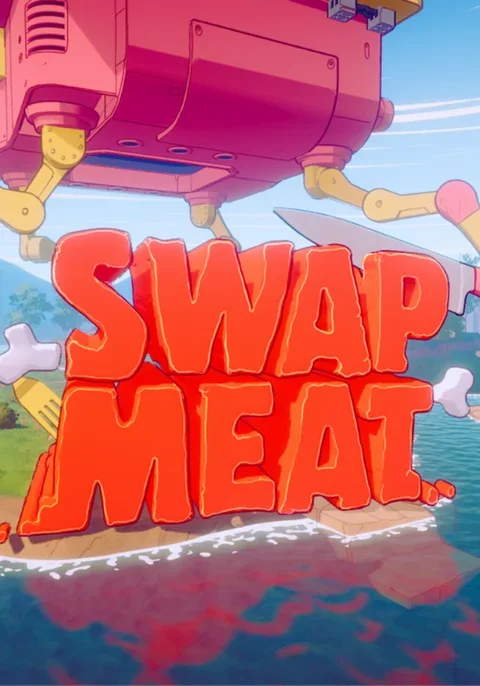
SWAPMEAT is a roguelite action game where you steal body parts from enemies and swaps them onto yourself mid-combat to gain their abilities.
Combat is fast-paced and relentless. Enemies, events, and part combinations are randomized across runs, and permanent upgrades carry over between missions. The game supports 1–4 player co-op with difficulty that scales as players join or leave.
Levels take place across bizarre alien worlds — urban speedways, planetary cookouts, ruins filled with ancient tech — across four difficulty tiers from Casual to Nightmare.
Guild Wars Game Original #
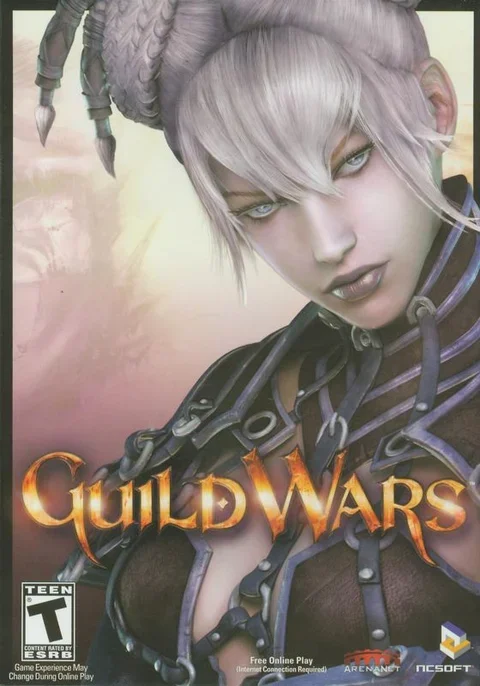
Guild Wars is a persistent online role-playing game set in a fantasy world, featuring cooperative and competitive play, with no monthly fee. The game is a skill-based RPG where player ability matters more than time invested or equipment collected.
I co-founded ArenaNet in 2000 with Mike O'Brien and Jeff Strain, and spent the better part of a decade helping build Guild Wars and its expansions. We raised funds in the aftermath of the "dot-bomb" financial meltdown, which saw our investment banker go out of business. We managed all the hiring, team-building, marketing, PR, HR, IT, and more. I led the creation of the ArenaNet and Guild Wars logos.
On the development side I helped design the game, and wrote 400K lines of code over seven years, or around 229 lines of code per day.
I led the development of online services, wrote the server platform and 80% of the backend services, the multi-threaded asychronous server networking code, client & server network protocols, key exchange & message encryption, forward-kinematic model animation system, crash reporting, sound/music player, model viewer, 3dsMax exporter plugin, art-processing tools, and more.
I wrote the dynamic service loader, build server, authentication server, file-patch server, matchmaking server, tournament server, chat server, database connect server, database cache server, distribution configuration management server, crash report server, game recording & playback server, billing integration servers, open proxy detection server, and more.
Guild Wars achieved 99.995% service reliability -- including all maintenance downtime -- during my tenure.
Guild Wars: Factions Game Original #
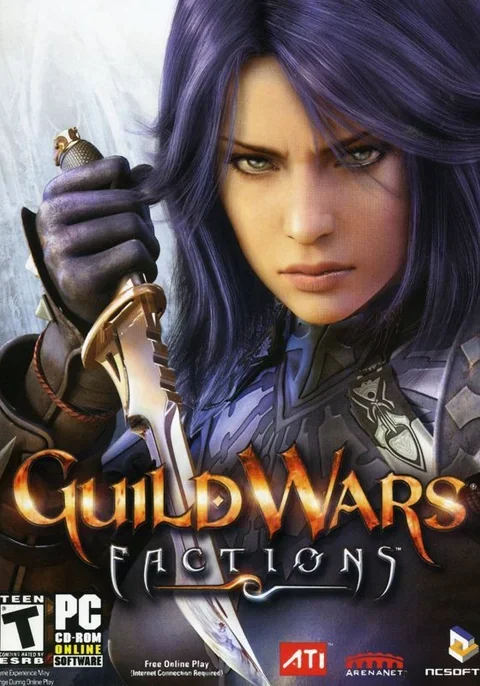
Guild Wars: Factions, released in April 2006, takes players to Cantha — a continent inspired by East Asian aesthetics, and two warring factions, the Luxons and Kurzicks.
The campaign follows a plague threatening Cantha and a civil war between its great houses. PvP was expanded significantly, and characters can travel between Cantha and the other Guild Wars continents on the same account.
Two new professions were added: the Assassin, a fast melee class built around combo chains, and the Ritualist, who summons spirit allies and channels the power of the dead.
Guild Wars: Nightfall Game Original #
Guild Wars: Nightfall, released in October 2006, takes players to Elona — a continent divided between a lush coastal kingdom, a sun-scorched trade nation, and a vast hostile desert. The campaign's antagonist is Abaddon, a fallen god imprisoned beyond the world's edge whose influence spreads madness and corruption across the land.
The defining addition was the Hero system. Where previous campaigns offered Henchmen as simple AI followers, Heroes are fully customizable companions with their own builds, equipment, and skill bars that players can manage in combat. Up to seven heroes can accompany a player into any mission, making solo play much more viable.
Two new professions were also introduced: the Dervish, a scythe-wielding melee fighter who draws on divine enchantments, and the Paragon, who uses a spear and shouts to support allies from mid-range.
Guild Wars: Eye of the North Game Original #
Guild Wars: Eye of the North, released in 2007, sends players to the Far Shiverpeaks and the underground realms beneath Tyria, introducing the Asura and Norn as allied races while expanding the story of the Charr, who had been antagonists since the original Prophecies campaign.
Eye of the North bridges Guild Wars 1 and 2, setting up the world-altering events that shape Tyria in the 250 years between the two games.
The expansion added multi-level dungeons with branching paths and boss encounters. Its most notable mechanic was the Hall of Monuments — a personal trophy room where players register achievements, titles, and rare equipment. Those records carry forward to unlock rewards in Guild Wars 2.
Guild Wars 2 Game Original #
Guild Wars 2 launched in August 2012, is set 250 years after the events of the original Guild Wars. The game includes Dynamic Events — open-world encounters that unfold, escalate, and resolve based on player participation, with the world visibly changing based on outcomes.
Combat was built around action principles: a dedicated dodge roll, weapon skill sets that change when you swap weapons mid-fight, and a downed state that gives fallen players a last chance before defeat. The traditional MMORPG trinity of tank, healer, and DPS was deliberately avoided — all professions can contribute to healing and mitigation, making group composition more flexible.
The Living World system delivers ongoing story chapters between major expansions, each permanently changing parts of the game world. Several full expansions have followed — Heart of Thorns, Path of Fire, End of Dragons, and Secrets of the Obscure — each adding new regions, professions, and mechanics.
StarCraft Game Original #
StarCraft is a real-time strategy game released in 1998. The game introduced three completely distinct races — the adaptable Terrans, the insectoid Zerg, and the technologically advanced Protoss — each requiring different strategies and playstyles.
Initially I worked on voice-over-IP for StarCraft, and had it working in 1996. Unfortunately, every sound card required a driver upgrade to support simultaneous voice recording alongside sound/music/voice playback, so we anticipated absolutely staggering customer support costs, and consequently decided to cancel the feature. Woulda been cool tho.
When we rebooted the project after E3 1996 it was clear that the project was all-hands-on-deck, and so I and the whole team pitched in to finish the effort. The code was remarkably buggy, and so the majority of my efforts ended up being correcting multiplayer sync issues, fixing pathfinding issues, improving tactical AI, and fixing crash bugs (mostly related to bad linked-list code).
I felt especially heartened when Brian Fitzgerald, another programmer on the project, who was key to making StarCraft possible with his brilliant innovations in AI & pathfinding, reached out to me a decade after the game shipped -- and long after I had left Blizzard -- to send kudos for my bug-fixing efforts. Glad someone noticed, because fixing bugs is unsung work!
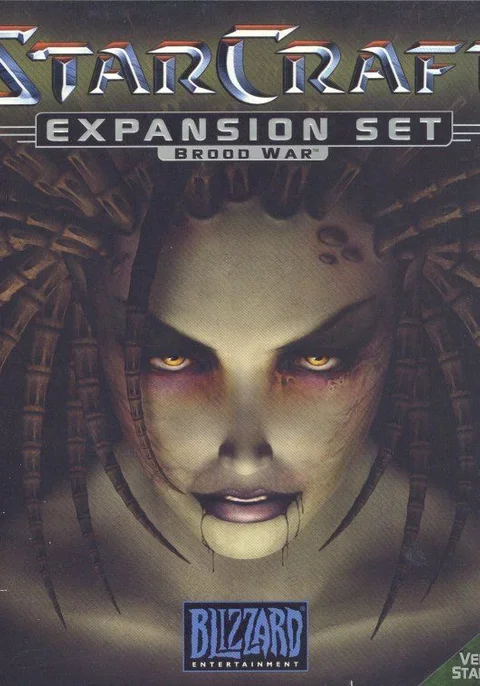
StarCraft: Brood War Game Original #
StarCraft: Brood War launched in December 1998, eight months after StarCraft. The expansion continued all three race campaigns with new units for each side, added over a hundred multiplayer maps, and shipped the map editor that StarCraft had launched without.
Initially conceived to be a co-development effort with Saffire, another game developer, this project -- like all of Blizzard's external development efforts -- foundered, so we brought it back in house to finalize and release, which is another code-name for crunch time by the core Blizzard team.
With the team's efforts, notably Rob Pardo in his early years at Blizzard as a balance designer, we added many new units, then completely rebalanced the game to be a better experience than the original.
It went on to cement StarCraft's competitive scene in South Korea, where professional play expanded into televised leagues that ran for over two decades — long after StarCraft II launched.
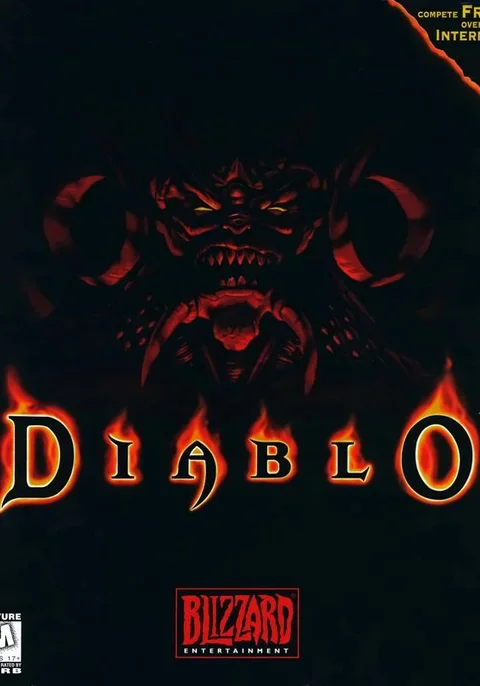
Diablo Game Original #
Diablo, inspired by roguelikes and Dungeons & Dragons, was originally designed as a single-player, turn-based game by Condor Entertainment (later, Blizzard North). When Allen Adham and I heard about the game we thought it would be awesome if it were real-time and multiplayer. We inked a deal with Condor and immediately set about convincing them to change the game.
At the time the game was being developed, game magazines (made of paper -- this was the old days) were pushing the idea that "the role playing genre is dead". When the game shipped in December 1996 it became a global phenomenon. Initially derided as an "action RPG", which is to say, not a "true RPG", it has since become the definitive template for the RPG genre.
When developed wasn't progressing, I flew to Blizzard North to implement multiplayer for them. It was ... an ordeal. 14+ hour days, 6-7 days per week for four months. Would not recommend. In addition to writing the multiplayer syncing code and integrating with battle.net (conceived and written by Mike O'Brien), I also wrote the sound player, some of UI code, (rewrote) event-handling, and -- as I later did with StarCraft fixed an enormous amount of bugs, oh yes I did.
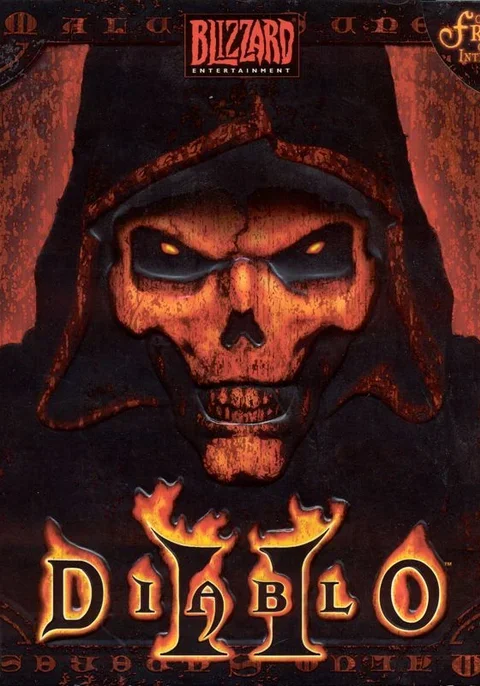
Diablo II Game Original #
Diablo II launched in 2000, with vastly larger scope than the original. Four acts span environments from Middle Eastern deserts to Amazonian jungles, following a wandering hero chasing the corrupted Dark Wanderer toward a confrontation with Diablo's brothers, Mephisto and Baal.
The folks at Blizzard North were chagrined by how much help (art, programming, design, etc.) was required from Blizzard "South" (AKA "original Blizzard") to finish Diablo I, so they did all the development work themselves for Diablo II, though we did have a lot of input on the design.
I was leading battle.net. Strike that, I was the only person on battle.net. And so my role for Diablo II was to write the battle.net components required for their game to handle matchmaking and support client-hosted servers, and later battle.net hosted servers.
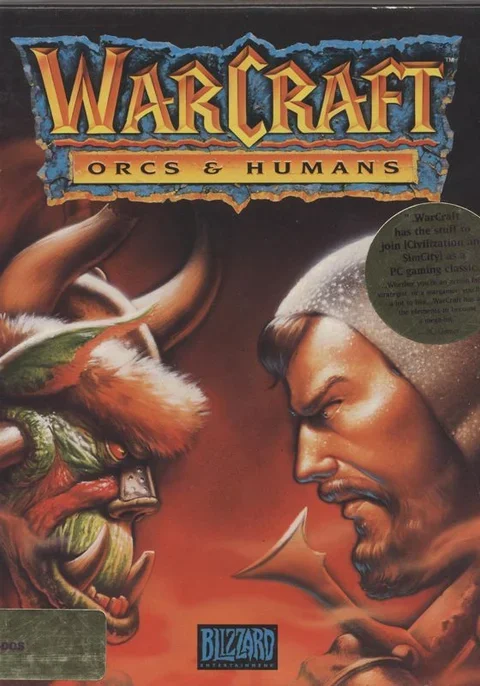
WarCraft: Orcs and Humans Game Original #
Warcraft: Orcs and Humans is a real-time strategy game released in November 1994 by Blizzard Entertainment (then Silicon & Synapse). Inspired by Dune II, it put players in command of either Humans or Orcs fighting for control of the fantasy world of Azeroth.
This title was my first original title as a project lead, and I served as both Producer and Lead Programmer, starting as the sole developer in September 1993. I built the core engine, user-interface, gameplay, and art tools before the broader team came together in early 1994.
One feature I'm still proud of is the rubber-band multi-unit selection, where players could drag a rectangle to select a group of units and command them together. It was something Dune II didn't have, and once I had it working I spent way more time playing with it than writing new code.
I also designed and implemented the network synchronization system that made multiplayer possible — sending only player commands rather than full game state, so the game could run over modems.
The first-ever multiplayer game was played between me and Bob Fitch in June 1994. It crashed. But even through the crash we both knew we were onto something amazing.
WarCraft II: Tides of Darkness Game Original #
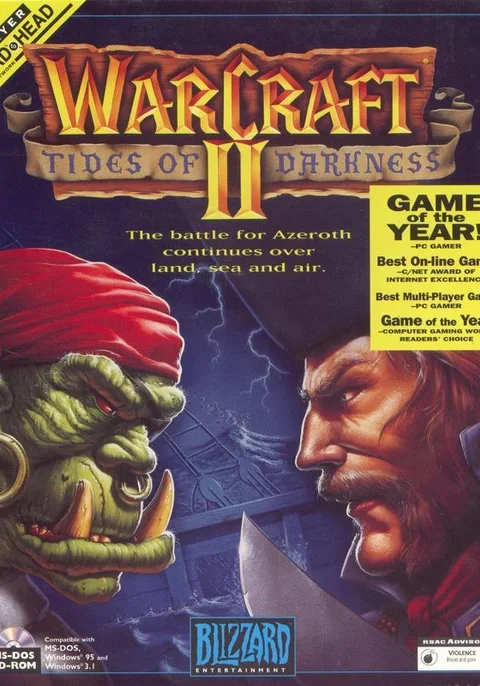
Warcraft II: Tides of Darkness, released in December 1995, expanded on its predecessor with higher-resolution graphics, multiplayer support for up to eight players, and armies that fought on land, sea, and air.
As for the first game, I continued as Producer and Lead Programmer but got a lot of additional help with production and programming due to the scope of the project.
The game was markedly better in every way: high-res 640x480 resolution (vs. 320x200); eight player multiplayer (instead of just two); larger selection limit (nine units instead of four); more theatres for combat with land, sea, and air units; more resource types with the addition of oil to the original gold and wood; and the game shipped with a map editor so players could build their own missions.
The game shipped only one year after Warcraft I — a pace that seems almost unimaginable today.
WarCraft II: Beyond the Dark Portal Game Original #
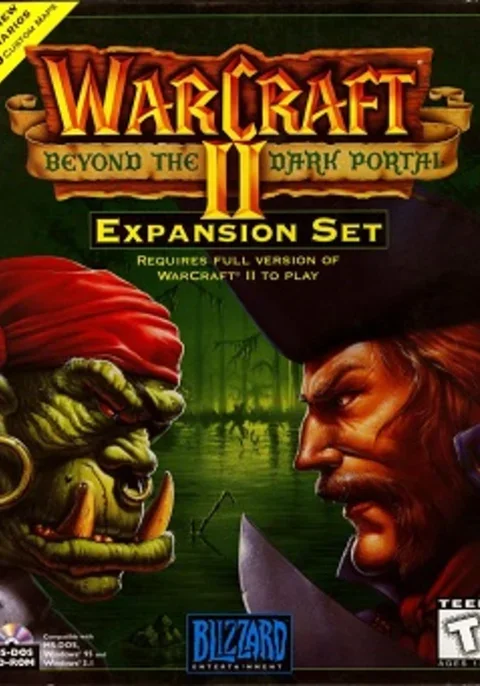
Beyond the Dark Portal shipped in April 1996 — just months after Warcraft II. The expansion added two new campaigns sending players through a dimensional gateway to Draenor, the Orc homeworld, with named hero units leading each side across 24 missions.
The expansion was initially developed by Cyberlore Studios working with the Warcraft II engine and assets our team had built, but the project didn't go well so we pulled it back in-house to finish the project.
Tera Game Original #
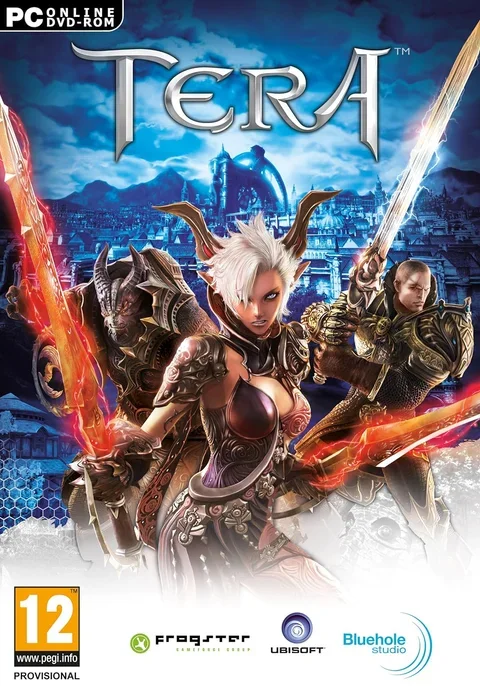
TERA, developed by Bluehole Studio, launched in North America in May 2012. Its defining feature was real-time action combat — attacks required genuine aim, hitting a moving enemy meant leading your target, and a well-timed dodge could nullify an entire boss attack pattern rather than being absorbed passively by stats.
In my role as COO of En Masse Entertainment (a startup/subsidiary of Bluehole) I helped build a studio to publish Tera in North America.
Along with Jae-Heon Yang (CEO), Chris Lee (CMO) and Brian Knox (Game Producer), we built En Masse from a startup into a full publishing organization.
I was responsible for the Datacenter Operations (led by Markus Schweig), Customer Service (led by Adam Stayer), Web Development (led by Shaun Yelle), and Platform Services (Jon Tuite and Tommy Lieberman); and for contracting with Digital River (billing), Sleepy Giant (platform development), iovation (security), and many others.
One of the initiatives I'm especially proud of was Chronoscrolls, which, like PLEX in Eve Online, were tradable in-game items that allowed players to extend their play time, and which dramatically reduced game fraud caused by gold farming.
Aion Game Original #
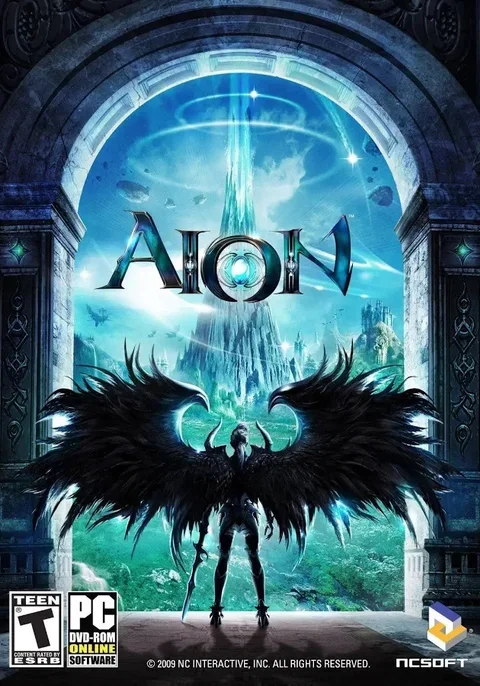
Aion: The Tower of Eternity launched in North America in September 2009, and was developed by NCsoft Korea. Its defining feature was flight: characters grow wings and can fly freely in designated zones, making aerial combat a core part of both PvE and PvP. Flanking from above, diving into fortress breaches, and fighting in three dimensions were all part of the game's design.
I worked at NCsoft West to lead the development of the publishing platform for Europe and North America as CTO, which included Billing, Datacenter Operations, IT, Customer Support, Analytics, and Core Technologies Development.
The Lost Vikings Game Original #
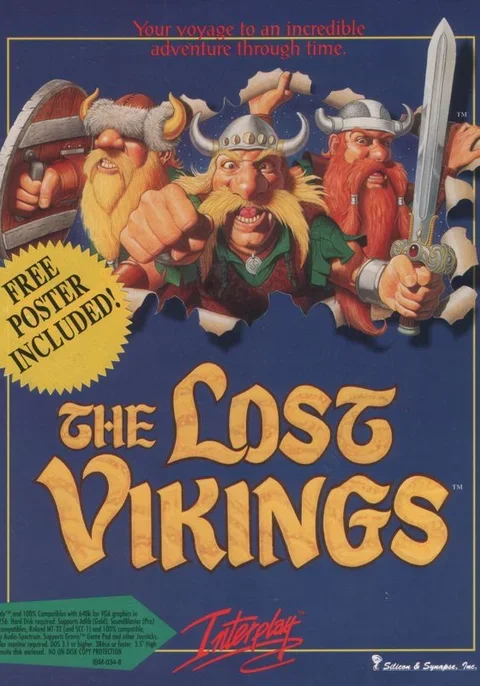
The Lost Vikings, released in 1992, is a puzzle platformer built around controlling three characters with distinct abilities. Erik the Swift can run fast and headbutt through walls. Baleog the Fierce fights with a sword and bow. Olaf the Stout blocks attacks with his shield and can glide on air currents. All three were abducted by an alien collector and need to reach the exit of each level to progress.
I was one of the level designers of this title, a departure from my role as a programmer. The game morphed from being inspired by the brilliant game Lemmings (lots of little creatures with different abilities) into a puzzle-platformer with five vikings.
It was a struggle to build levels that didn't require a lot of walking to accomplish the missions, and so my critical design contribution was suggesting we reduce from controlling five vikings to only three.
I also did some programming on this title, probably not a lot.
Norse by Norse West: The Return of the Lost Vikings Game Original #
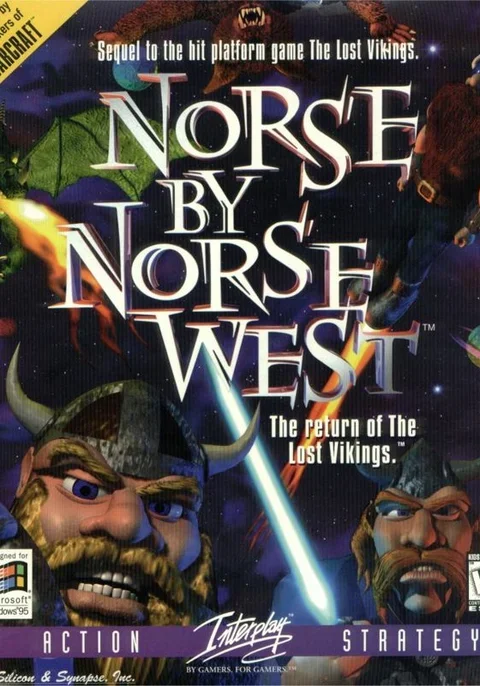
Norse by Norse West: The Return of the Lost Vikings — known as The Lost Vikings 2 in North America — arrived in 1997. It brings back Erik, Baleog, and Olaf and adds two new characters: Scorch the Dragon, who can fly and breathe fire, and Fang the Werewolf, who can climb walls and throw a boomerang.
I was mostly working on other games while this was in development, and I'm not actually credited, but I helped a bit.
Rock n Roll Racing Game Original #
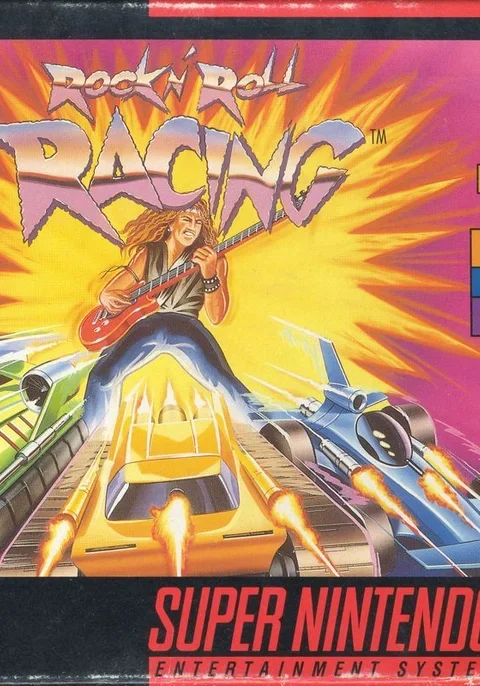
Rock n' Roll Racing, shipped in 1993, is an isometric-perspective racing game with weapons and an announcer who narrates the carnage.
Audio tracks including Black Sabbath's "Paranoid," Deep Purple's "Highway Star," and George Thorogood's "Bad to the Bone" play throughout. Two players can race simultaneously in split-screen.
The lead developer was Bob Fitch, who did an amazing job making the game fun, squeezing the code to fit in the Super Nintendo's ("SNES") limited cartridge space, and optimizing the game to run fast on a 2.58 Mhz processor.
My role for this project was to write the "track compiler", which took a top-down 2d map of the racetrack (similar to a drawing on graph-paper) and convert it into a 3d, isometric view. This was challenging because the SNES uses renders terrain using 8x8 cells stored in planar format. I'm sure the hardware designers were able to make the SNES less costly to manufacture, but it sure made it challenging to program.
On the plus side, I was able to crib off code created for RPM Racing (prequel to Rock & Roll Racing), written by the incomparable Bill (later Rebecca) Heineman, AKA Burger, one of the founders of Interplay Productions, and a brilliant hacker -- that is, once I learned 6502/65816 assembly language, which I didn't know at the start of the project.
Blackthorne Game Original #
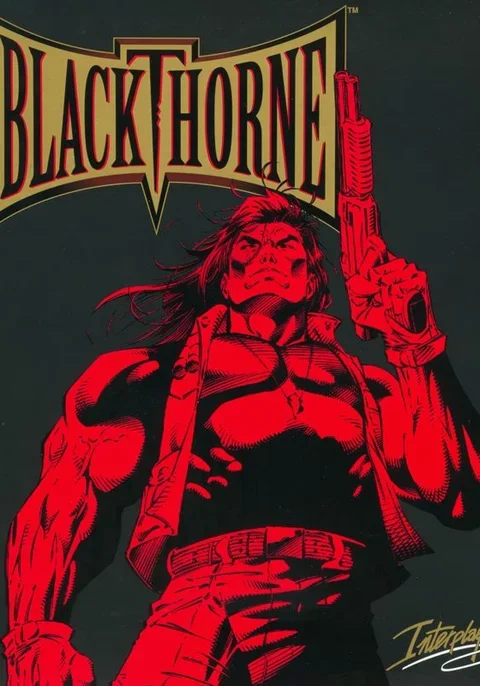
Blackthorne shipped in 1994. Kyle Blackthorne is a soldier: he fires a shotgun over his shoulder mid-sprint, uses enemies as human shields, and is always outnumbered.
The game shares DNA with cinematic platformers like Prince of Persia and Another World in its focus on animation weight and deliberate movement. Blizzard re-released it via Battle.net in 2013.
The game has dark tone distinct from most platformers of its era, and I'm surprised it was able to get past review by Nintendo given the violence.
My role for this title was engine programmer; I developed features the gameplay programmers needed that weren't in the internal scripting engine we used to develop the game.
Justice League: Task Force Game Original #
Justice League: Task Force, released in 1995, puts DC heroes and villains into a one-on-one fighting game. The roster includes Superman, Batman, Wonder Woman, The Flash, Aquaman, and Green Arrow on the hero side, with Despero and Darkseid as opponents. Each character has a story mode path framing their reason for fighting.
Blizzard Entertainment developed the Super Nintendo version of the game, which plays noticeably differently from the Genesis version (developed by Condor Studio, later acquired by Blizzard to create Diablo) in feel and visual style.
I was working on several games at once, and my contribution to this title was engine-programming and "glue screens", which is what we at Blizzard called all the interstitial screens that glue the game together (title screen, setup, etc.).
The Death and Return of Superman Game Original #
The Death and Return of Superman, released in 1994 for Super Nintendo and Sega Genesis, adapts the 1992–1993 DC Comics arc: Superman's battle with Doomsday, his death, and the emergence of four characters claiming his mantle during his absence. Players fight through the story as the original Superman and each of the four successors — Steel, Superboy, the Cyborg Superman, and the Eradicator — each with distinct moves.
I did a little bit of programming on this title, but honestly couldn't tell you what.
Dvorak on Typing / Mac Game Original #
Dvorak on Typing was a typing tutor for PC computers in DOS. It did the basic tutoring you'd expect, but it also had a mode very much like a video-game, where your success at typing helped a knight proceed through battles from screen-to-screen to defeat a dragon.
Silicon & Synapse (later Blizzard Entertainment) was contracted by Interplay Productions to conver the project from DOS to Macintosh.
Unfortunately, they didn't have the source code, only the art assets. (This was a regular occurence at Interplay -- they frequently lost the source code to old projects. Really).
Consequently, we needed to write the game from scratch, using the original as a template. I started the initial work, developing low-level hooks for Mac to be able to control keyboard input and text-rendering, which required some assembly language. Fortunately I had hacked my way around patching Mac traps before (thank you, MacTutor magazine), and so this was relatively easy.
Before I could finish the project I was called upon to work on other projects, and so handed off programming to a contractor and fellow UCLA grad Jeff Schubert, while I stayed on as project producer briefly before handing off that role to Allen Adham.
The scope of this project -- developing a project from scratch -- was a much, much larger project than any of us realized at the time, as the project was deceptively large. Jeff, who consumed around 200 liquid ounces of Coca Cola per day in (2 big gulps and a six pack), plugged away at the project until it was done. Kudos Jeff!
Battle Chess Game Original #
Battle Chess, originally developed by Interplay Productions in 1988, gave every chess move a visual payoff: pieces walk across the board and fight each other with unique animations when one captures another. The rook stomps over pawns; the queen dispatches opponents with magic. Each matchup has its own animation, so part of the fun is seeing what happens when different pieces clash.
I was in college, two quarters from graduating, when my good friend Mike Morhaime asked me to contract with his startup, Silicon & Synapse (later Blizzard Entertainment). I worked on it part time while finishing school and working another programming job in the Psychology Department developing analytical software.
The contract was to port ("convert") Battle Chess from DOS to run on Windows 3.1, where I had some expertise already. I got paid very in monetary terms -- it worked out to around $5/hour -- but was paid handsomely in learning. I also gained the confidence to believe I could write games myself.
The part I couldn't get working was the music-player, which would not run well in Enhanced Mode: Windows CPU time-slicing was too slow so the music would stutter. (Everything worked fine in Real Mode and Standard Mode). I just disabled music.
The other challenging issue was getting a game that wants the whole computer to itself to run nicely on Windows, a cooperatively multi-tasked operating system, required some clever hacks.
I later developed the Windows-MPC (high-resolution 640x480) version, which looked quite good.
Battle.net Service Original #
Battle.net launched on December 31, 1996, alongside Diablo — the first online gaming service built directly into the games themselves rather than requiring a separate client. Players could connect for free, chat with other gamers, and join multiplayer matches without subscription fees, a model that stood in stark contrast to the paid services of the era.
The service grew into a massive social platform where players across Diablo, StarCraft, Warcraft II, and eventually World of Warcraft could communicate and compete. Ladder ranking systems, achievement tracking, and persistent profiles gave players reasons to keep logging in.
From around early 1999 (I guess) until I deparated Blizzard in early 2000 I was, in addition to VP R&D, the battle.net lead, or rather, the only person working on battle.net. Yes, we didn't spend enough money on it!
Battle.net needed a lot of love because it was bursting at the seams. At least one of the servers would crash every day. There was no monitoring. No one knew how many players were using it short of connecting to every server and checking the count.
Even so, the architecture of the service was brilliant and I learned about building online services, which was of great utility in building Guild Wars online services.
sandvault Tool AI Open Source Original #
sandvault runs AI agents in an isolated macOS user account with additional protection from sandbox-exec, limiting what agents can access on your machine and protecting your critical files and credentials.
Running AI coding agents is a leap of faith — they can read your files, use your credentials & browser login-cookies, access other computers with your SSH keys, and modify anything on your computer. sandvault eliminates that risk by running agents in a separate macOS user account. It adds a layer of protection with Apple's Seatbelt (sandbox-exec) to set addition restrictions. Your home directory, browser profile, and personal files stay completely off-limits.
sandvault is pre-configured to run Claude Code, OpenAI Codex, Google Gemini, and OpenCode, enabling them to write and execute code in an isolated environment while you share only the files you choose. There's no VM boot time or Docker overhead — just instant user switching with native macOS performance.
sandvault supports headless Chrome for browser automation and iOS Simulator for app testing, all from within the sandbox. Agents can navigate websites, fill out forms, scrape content, and test iOS apps without ever touching your personal files.
clodpod Tool AI Open Source Original #
clodpod runs AI agents isolated inside a macOS virtual machine, limiting what agents can access on your machine and protecting your critical files and credentials.
clodpod is pre-configured to run Claude Code, OpenAI Codex, Cursor Agent, and Google Gemini, enabling them to write and execute code in a sandboxed virtual environment while allowing access to files you share. Sandboxed agents can't read your home directory, access your browser profile, or make changes to your user account.
clodpod's use of virtual-machines provides a strong boundary around your computer and data.
push10k App Original #
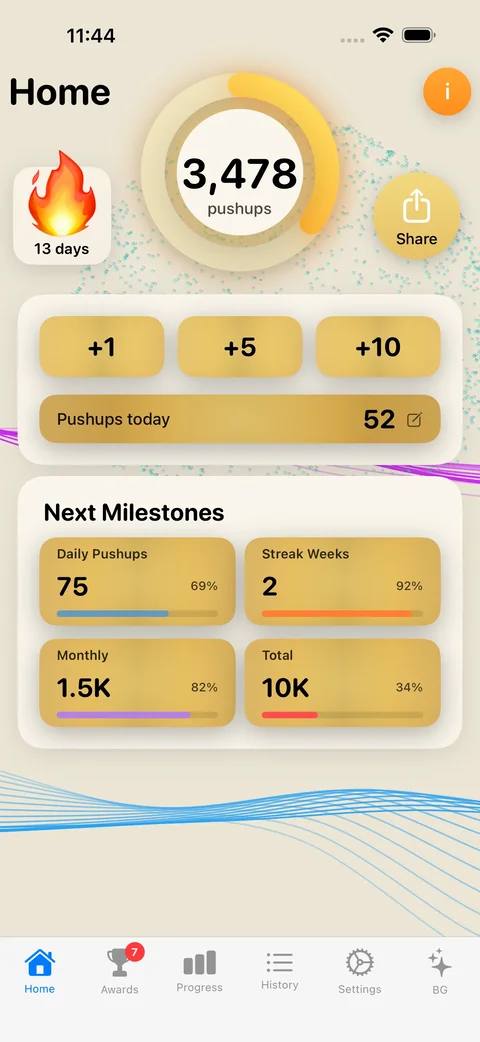
push10k is an iOS fitness app built to help you complete 10,000 push-ups. The app tracks your sessions, counts your cumulative total, and shows your progress toward the milestone — turning what could be a vague fitness resolution into a concrete, measurable challenge with a finish line.
ChronoSnap App Original #
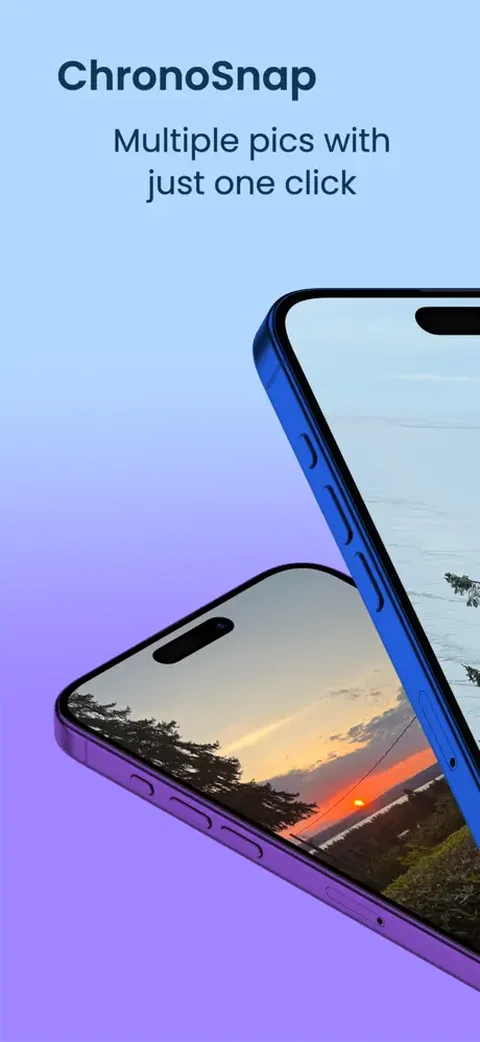
ChronoSnap is an iOS app for taking a series of photos every few seconds, allowing you to mug for the camera with your friends and get the best shot.
Habits Example App Open Source Original #
Habits is an iOS app for tracking daily routines and building consistency over time. It presents a simple daily checklist — mark a habit done, build a streak, see your history at a glance.
I wrote this as an experiment. The code is open source, and available on GitHub as a reference for developers learning to build iOS apps.
RealityKit Example App Open Source Original #
A sample iOS app using RealityKit, Apple's 3D rendering framework.
I wrote this app to learn more about RealityKit, and open-sourced it for others as reference for getting started with RealityKit and ARKit on iOS.
Phoenix Slides Tool Open Source Fork #
This is a fork of the (apparently abandoned) Phoenix Slides app, a macOS image viewer thats let you navigate a folder of images quickly with keyboard shortcuts.
Because Phoenix Slides is open-source I was able to fix a few issues and build my own version. Thanks Dominic Yu (gobbledegook @ GitHub) for creating the app!
git-multi-hook Tool Open Source Original #
git-multi-hook simplifies running multiple scripts for git hook events: it will discover and run every script you've placed in a directory, in parallel, and supports both global and per-repository hooks.
Prior to version `2.54`, git would only run one script when a git event hook triggered so I wrote git-multi-hook. While later versions of git fix this issue, they must be individually configured.
git-multi-hook simplifies configuratoin: drop a hook script into a directory where it will get auto-detected when the event occurs.
All the hook scripts are run in parallel (and print their output serially for easy readability), so it's possible to run many hooks -- linting scripts, quality gates, formatters, or test runners -- rapidly.
pbutils Tool Open Source Original #
pbutils is a set of command-line utilities that bring macOS-style clipboard operations to other platforms: pbcopy and pbpaste read and write the system clipboard, letting shell scripts and terminal workflows manipulate clipboard content the same way on every machine; and tnet, a simple telnet client.
When I wrote these I was a Mac user learning Linux, and was frustrated by the lack of tools. Of course, I later learned of the existence of xsel for Linux, but these were simple to write so all good.
dotfiles Example Open Source Original #
dotfiles is my personal configuration system for keeping shell settings, editor configs, and tooling preferences synchronized across multiple machines and virtual machines, and works for macOS, Linux, Windows, git-bash, Cygwin, and Babun.
The repo handles environment detection to apply machine-specific overrides while keeping a shared baseline across platforms. Scripts automate the initial bootstrap on a fresh system, so going from bare OS to a fully configured environment takes seconds.
CSNamedPipes Example Open Source Original #
CSNamedPipes is a C# example demonstrating how to use Windows Named Pipes for interprocess communication. Named pipes offer a reliable, bidirectional channel between processes on the same machine — or across a network — without the overhead of sockets or the complexity of shared memory.
The library and sample code cover pipe server creation, client connection, asynchronous reading and writing, and proper teardown.
gnome-config-listener Tool Open Source Original #
gnome-config-listener is a utility that monitors GConf — the GNOME configuration system — and prints preference changes to the terminal as they happen. It's a developer and sysadmin tool for understanding which GConf keys change when you toggle a GNOME preference, move a window, or adjust application settings.
I was regularly frustrated when I moved to new Linux computers and wanted to reconfigure them to match my existing computers, so I developed this application to echo the changes so I could add the settings to my bashrc file.
Using this tool, and fiddling around in the control panel, you can discover configuration names & values you like and write shell scripts to save your preferences.
two-queues Example Open Source Original #
two-queues is a benchmark comparing publish-subscribe messaging performance using Redis and ZeroMQ as transport layers, implemented in both Python and Go. The project was originally created by Stephen McDonald to explore how much the choice of message broker and language affects throughput in a realistic pub-sub workload.
This version includes an implementation using Elixir, and it handily (if unfairly) beats the performance of the Python and Go versions by a wide margin using the capabilities of the Erlang BEAM runtime.
aho_corasick Example Open Source Fork #
The Aho-Corasick algorithm, published in 1975 by Alfred Aho and Margaret Corasick, solves the problem of searching a text for any of a set of pattern strings simultaneously. Rather than running a separate pass for each keyword, it builds a finite automaton from all patterns at once and scans the input in a single linear pass — making it far faster than naive repeated searching when the keyword set is large.
This C++ fork of cjgdev's implementation provides a library suitable for embedding in projects that need high-performance multi-pattern text matching.
Code of Honor Web Original #
Code of Honor is my personal website and brag page about game development.
The site is built with the Zola static site generator and hosted on Cloudflare Pages. Content is managed via Sveltia CMS with a Cloudflare Worker handling authentication. Comments are generated from a Remark42 server running on a Hetzner cloud server. Builds and syndication utilize GitHub actions.